
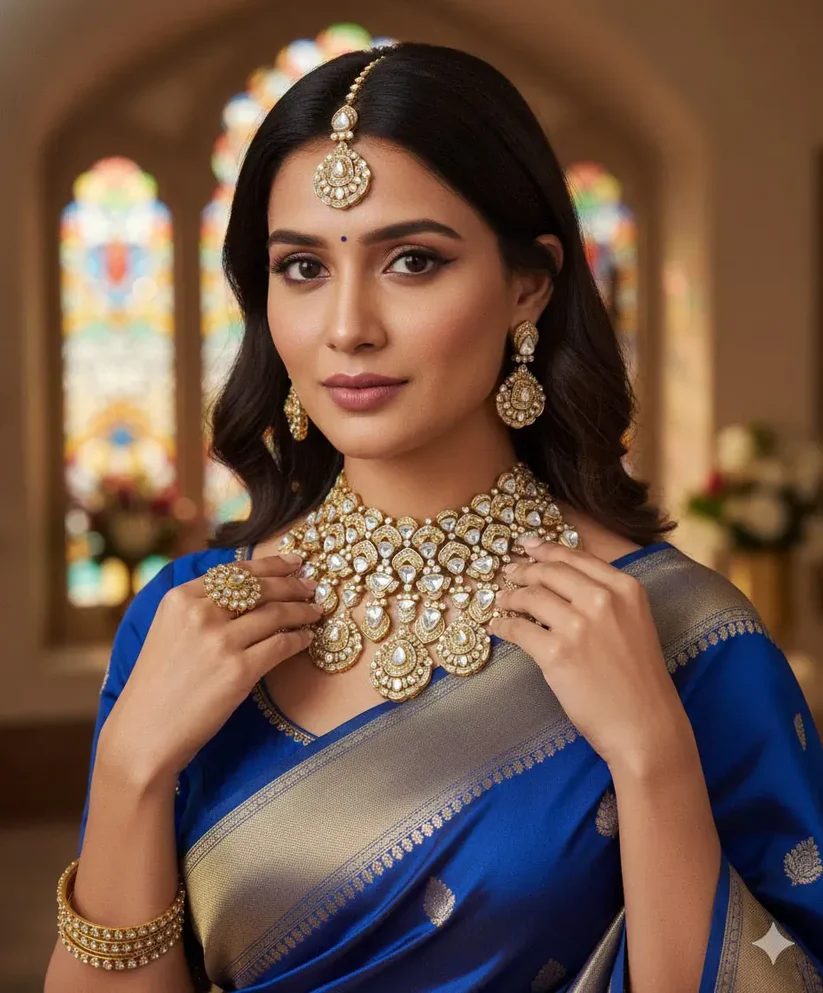
There’s something almost sacred about the moment a bride puts on her wedding jewelry. The weight of gold against her skin. The shimmer of stones catching light. For generations, these pieces carried more than beauty. They held stories, blessings, and prayers from mothers and grandmothers.
But here’s what’s changed. Today’s brides want those stories, yes. But they also want pieces they’ll actually wear again. Indian bridal jewelry sits at this interesting crossroads right now. One foot in centuries-old tradition. The other is stepping toward something entirely new.
The shift didn’t happen overnight. You can trace it back maybe ten, fifteen years. Brides started questioning why their wedding sets had to sit in bank lockers after the big day. Why couldn’t jewelry be both meaningful and practical? That question opened doors.
Traditional designs were never meant to be practical, though. Take the classic Rani Haar. These elaborate, multi-layered necklaces were status symbols. The more layers, the more gold, the better. They announced wealth and family standing. Brides wore them because that’s what brides did.
Fast forward to now. A bride might choose a sleek choker with polki work instead. Same craftsmanship, different execution. She can wear it to formal dinners later. Pair it with western outfits. Get actual use from a piece that costs a small fortune.
This thinking terrifies some families, to be honest. Older generations see it as disrespect. Abandoning culture. But that’s not really what’s happening here. The younger generation isn’t rejecting tradition. They’re reinterpreting it.
When Old Meets New
The jewelry itself tells this story best. Consider the kundan setting, one of the oldest techniques in Indian jewelry making. Jewelers set stones using pure gold and lac. The process takes weeks. Each piece is essentially handmade art.
Modern designers take this ancient technique and apply it differently. Smaller pieces. Geometric patterns instead of floral. Stones are set in unconventional ways. The skill remains the same. The aesthetic changes completely.
Or look at temple jewelry. Originally created for adorning deity idols in South Indian temples. These pieces featured heavy gold work, intricate carvings of gods and goddesses. Very ornate. Very traditional.
Now you’ll find temple jewelry reimagined as statement earrings. Or delicate pendants. The motifs stay recognizable, but the scale shifts. A bride can honor her heritage without looking like she walked out of a history textbook.
The materials have evolved, too. Not every bride can afford or wants solid gold. American diamonds offer sparkle without the weight or cost. Gold-plated pieces look stunning in photos and don’t drain savings accounts.
Some purists hate this. They argue it cheapens the tradition. But here’s another way to look at it. More brides can now participate in these customs. Access matters.
The Destination Wedding Effect
Destination weddings changed everything, perhaps more than anything else. When your wedding happens in Goa or Udaipur or even overseas, you can’t exactly travel with kilos of gold jewelry. Security concerns aside, it’s just impractical.
Brides needed lighter options. Designers responded with pieces that photographed beautifully but weighed significantly less. Layered looks became popular. Mix and match instead of heavy sets.
This created an interesting side effect. Brides realized they preferred the lighter pieces, even for traditional venue weddings back home. The comfort factor won out.
You see brides now wearing statement earrings with a simple necklace. Or skipping the necklace entirely and going big on Maang tikka and earrings. Rules that seemed written in stone? Suddenly flexible.
What Brides Actually Want
Talk to enough brides and patterns emerge. They want pieces that photograph well. Social media changed the game here. Jewelry needs to look good in photos, videos, and under different lighting.
They want versatility. A necklace that works with both the wedding lehenga and that fancy cocktail dress later. Earrings that don’t require backup because they’re so heavy.
They want personal meaning over family pressure. If a bride connects more with minimalist designs than heavy traditional sets, that should be okay. Some families get this. Others need convincing.
And they want quality craftsmanship without the lecture about how things were done decades ago. Respect for tradition, yes. But also respect for their choices.
The Design Language Shift
Watch how motifs have changed. Traditional designs are pulled heavily from nature. Peacocks, mangoes, lotus flowers. These symbols carried specific meanings. Fertility, prosperity, purity.
Contemporary designs might reference these motifs but abstract them. A peacock becomes a geometric pattern. A lotus turns into clean lines, suggesting petals rather than depicting them literally.
Color use has shifted, too. Classic bridal jewelry stuck to red, green, and sometimes blue stones. Safe choices that matched traditional bridal wear. Now you’ll see brides choosing rose gold over yellow. Champagne diamonds instead of the standard clear. Black beading mixed with gold.
The mixing of metals became acceptable. A piece might combine gold with silver tones. Or rose gold with white gold. Purists would have fainted at this years ago. Now it’s called fusion.
Craftsmanship Still Matters
Here’s what hasn’t changed, though. Brides still care deeply about craftsmanship. Maybe even more so now because they’re spending on pieces they plan to wear repeatedly.
The Jadau technique, meenakari work, and hand engraving remain highly valued. A well-made piece justifies its cost because the artistry shows. Bride’s research techniques now. They ask questions. They want to understand what they’re buying.
This actually helps traditional artisans. The ones who worried that younger generations would abandon these crafts entirely. Turns out there’s a huge demand for skilled work, just in different formats than before.
Small workshops are finding new life. They’re collaborating with contemporary designers. Teaching old techniques to new jewelers. The knowledge passes down but finds fresh expression.
The Heirloom Question
This part gets complicated. Traditional wedding jewelry was meant to become family heirlooms. Passed from mother to daughter, generation after generation. That was the whole point.
But if you’re buying lighter, more contemporary pieces, do they carry the same heirloom value? Some argue no. The emotional weight differs when pieces aren’t pure gold or don’t follow traditional patterns.
Others say heirloom value comes from the stories attached, not the gold weight. A piece your mother wore becomes meaningful because she wore it, not because of how it was made.
Families are navigating this in real time. Some brides wear their grandmother’s traditional pieces for the ceremony. Then switch to their own contemporary choices for the reception. Best of both worlds, maybe.
Where This Goes Next
Predicting trends feels impossible, but some directions seem clear. Customization will keep growing. Brides want input on their jewelry designs. They’re willing to wait for pieces made specifically for them.
Sustainability concerns are entering the conversation. Where does the gold come from? How are stones sourced? Younger buyers ask these questions more than previous generations did.
The line between bridal and non-bridal jewelry will keep blurring. Why should certain designs only work for weddings? Pieces that transition seamlessly from bridal to everyday will dominate.
And technology will play a bigger role. Virtual try-ons. 3D printing for prototypes. AI is helping with design customization. The craft stays rooted in tradition, but the tools modernize.
Indian bridal jewelry isn’t losing its soul through this evolution. If anything, it’s finding a new life. Brides today honor their heritage while claiming their own aesthetic. They wear their mother’s blessings and their own style choices. That balance, difficult as it is to strike, might be the real tradition worth preserving.
Disclaimer
The content of this article is intended for informational and educational purposes only. It reflects trends, observations, and general insights regarding Indian bridal jewelry and does not constitute professional advice, financial guidance, or recommendations for purchasing jewelry. Individual experiences, preferences, cultural practices, and market availability may vary. Readers are encouraged to conduct their own research or consult with qualified jewelry professionals before making any purchasing decisions. The author and publisher are not responsible for any outcomes, interpretations, or personal decisions based on the information provided in this article.
 John
John