
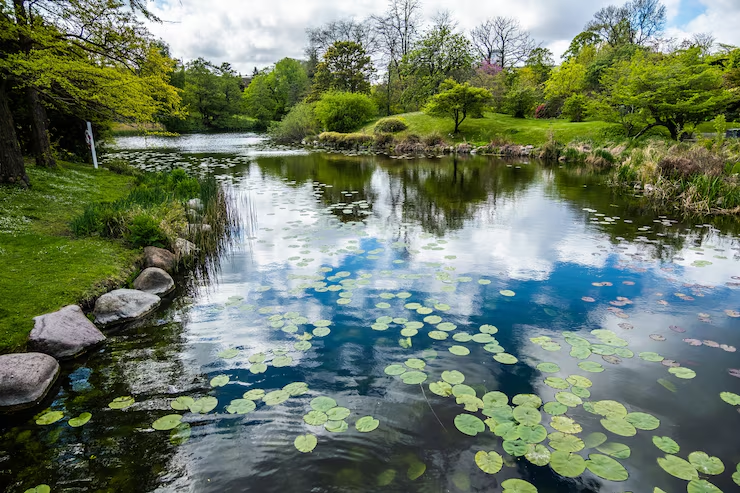
You notice the pond water looking murky. Fish are gasping near the surface. Green algae creeps across the edges faster than you can scrub it away. Something feels off, but you’re not sure what the issue is.
The problem might be lack of oxygen. Most people don’t realize that ponds need air circulation just like any living ecosystem. Pond aeration is the process of adding oxygen to your water, and it’s one of those things you don’t think about until something goes wrong. When oxygen levels drop, everything suffers. Fish struggle to breathe. Beneficial bacteria die off. The whole system starts to collapse.
Here’s what happens without proper aeration. Organic matter like leaves, fish waste, and uneaten food sinks to the bottom. Bacteria break down this muck, but they consume oxygen while doing it. In warm weather or stagnant conditions, oxygen gets used up faster than it can be replaced naturally. Your pond essentially suffocates.
Why Your Pond Actually Needs Oxygen
Think of your pond as a closed environment. Unlike a flowing stream that constantly mixes with air, still water has limited contact with the atmosphere. The top few inches might be fine, but deeper areas can become oxygen-starved zones where nothing survives.
Fish aren’t the only ones depending on dissolved oxygen. The good bacteria that keep your water clear need it too. Without enough oxygen, anaerobic bacteria take over. These are the bad guys that produce hydrogen sulfide, the rotten egg smell that tells you something’s seriously wrong.
Plants help during daylight by releasing oxygen through photosynthesis. But at night, they actually consume oxygen. If you have a lot of vegetation, nighttime oxygen levels can crash. That’s when you might see fish gulping air at the surface come morning.
What Aeration Systems Do
Aeration equipment moves water to increase its contact with air. Some systems spray water into the air. Others push air bubbles up from the bottom. Both methods work, but in different ways.
Surface aerators sit on top of the water and create splashing patterns. They’re great for shallow ponds where you want visual appeal along with oxygen. The splashing action also helps release trapped gases from the water.
Bottom diffusers are different. They sit on the pond floor and release streams of tiny bubbles. As these bubbles rise, they carry oxygen-poor water from the depths up to the surface, where it can exchange gases. This creates circulation throughout the entire water column, not just at the top.
The choice between them depends on your pond’s depth and shape. Shallow decorative ponds often do fine with surface systems. Deeper ponds benefit more from diffused aeration because it addresses the whole water column.
Signs You Need an Aeration System
Maybe you’re wondering if aeration is really necessary for your setup. Here are some red flags that suggest oxygen problems.
Fish behavior tells you a lot. If they’re constantly at the surface or gathered near a waterfall or fountain, they’re seeking oxygen-rich areas. Sluggish fish or unexplained deaths point to the same issue.
Water clarity is another indicator. Persistent cloudiness or green water that won’t clear up despite chemical treatments often means the biological balance is off. Poor oxygen levels prevent beneficial bacteria from doing their job.
Foul odors are a dead giveaway. That swampy, sulfur smell means anaerobic conditions have taken hold. The pond has tipped into a state where harmful bacteria dominate.
Excessive algae growth can also signal problems. While multiple factors contribute to algae, low oxygen creates conditions where algae thrive, and natural competitors struggle.
How Much Aeration Does Your Pond Need
This is where people get confused. Aeration isn’t about one-size-fits-all. Your pond’s size, depth, fish load, and even weather patterns all matter.
Pond volume determines the baseline need. Larger bodies of water require more powerful systems or multiple units. But depth matters just as much. A shallow 1000-gallon pond needs less circulation than a deep 1000-gallon pond because shallow water naturally exchanges gases better.
Fish population increases oxygen demand. A koi pond packed with large fish needs serious aeration compared to a lightly stocked goldfish pond. Each fish is breathing and producing waste that must be processed.
Summer heat reduces the water’s ability to hold dissolved oxygen. Warm water holds less gas than cold water. This is why fish stress and algae blooms spike during hot weather. Your aeration system needs to work harder when temperatures climb.
Types of Aeration Equipment
The market offers several approaches. Understanding the basics helps you make sense of the options.
Fountain-style aerators combine decoration with function. They spray water in patterns while adding oxygen. These work best for smaller ponds where aesthetics matter. The downside is they don’t circulate deeper water well.
Windmill aerators use wind power to pump air. They’re popular for large rural ponds where electricity isn’t available. Free operation is appealing, but it only works when the wind blows.
Electric diffuser systems are the workhorses. An air pump on shore pushes air through tubing to diffusers on the pond bottom. They run continuously and handle ponds of any size. The main cost is electricity, but modern pumps are pretty efficient.
Solar-powered units offer a middle ground. They work during daylight when oxygen demand peaks. Battery backup extends operation into evening hours. Initial cost is higher, but operating costs drop to nearly nothing.
Installation Basics
Getting an aeration system running isn’t complicated, but a few things matter. Diffusers should sit in the deepest part of your pond. This ensures they’re lifting stagnant water from the bottom. Spread multiple diffusers around large ponds rather than clustering them.
Air pumps need protection from the weather. A ventilated housing or shed works well. Keep them above the water level to prevent backflow. Check that your electrical setup can handle the load and meets safety codes for outdoor water features.
Tubing should be weighted or buried to keep it in place. Fish can disturb loose tubing, and you don’t want it floating to the surface. Use quality connectors that won’t leak. Air leaks waste energy and reduce performance.
Maintenance Requirements
Aeration systems are pretty low-maintenance, but they’re not set-and-forget. Diffusers clog over time with mineral buildup or debris. Cleaning them once or twice a season keeps airflow strong. Some people just swap in spare diffusers rather than dealing with cleaning.
Air pumps need occasional filter changes. Dust and pollen get sucked into the intake. A clogged filter makes the pump work harder and shortens its life. Most manufacturers recommend checking filters monthly during heavy use.
Listen for changes in sound. A humming pump that suddenly gets louder might have a worn diaphragm. Catching problems early prevents complete failure. Keep spare parts on hand if your pond depends on continuous aeration.
Winter operation depends on your climate and goals. Running aeration year-round prevents ice from completely covering the pond, which helps gas exchange. But in extreme cold, you might need to adjust the diffuser depth to avoid supercooling the entire pond.
Common Mistakes People Make
New pond owners sometimes undersize their aeration requirement. They buy a system rated for their pond’s volume, but forget to account for heavy fish loads or hot summers. It’s better to oversize slightly than run at maximum capacity constantly.
Placement errors reduce effectiveness. Putting diffusers too close to the edge or too shallow wastes their potential. They need to pull from the deepest, most stagnant areas.
Some people run aeration only during the day. Nighttime oxygen crashes are real, especially in planted ponds. Continuous operation prevents these dangerous drops.
Ignoring maintenance leads to gradual performance loss. A clogged diffuser might still bubble, but it’s not moving enough water to matter. Regular checks keep the system working as intended.
Disclaimer
The information provided in this article, Pond Aeration 101: A Beginner’s Guide to Healthier Water, is intended for general educational purposes only. It is not a substitute for professional advice. Pond conditions vary widely depending on size, depth, fish species, climate, and other factors. Always consult a qualified pond specialist, aquaculture expert, or veterinarian for advice specific to your pond and its inhabitants. The author and publisher are not responsible for any damages, injury, or loss that may result from implementing the practices described in this article.
 John
John